
RESEARCH AT CASRA
Applied, interdisciplinary, and holistic
Our research goal is to strengthen security and facilitate the flow of goods and people at airports and other environments where humans and machines interact. Our applied and interdisciplinary research is conducted in close collaboration with end users, airports, and regulators. We analyze, evaluate, and design systems using a holistic approach by taking into account interactions between humans and technology.
Our main research areas are “human factors and performance”, “human-machine interaction and systems” and “cognitive and computational modeling”. We also have a strong record of accomplishment in national and international research projects including several EU projects. We provide our knowledge to society through publications in scientific journals and by contributing to conferences and expert groups.
Research Areas
HUMAN FACTORS And Performance
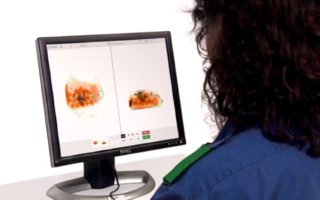
Performance of security screening depends strongly on human factors. Important determinants are pre-employment assessment, computer-based training, certification, and operational performance measurement.
HUMAN FACTORS And Performance
Despite advances in technology, aiport security officers (screeners) are still indispensable in X-ray screening of passenger bags and other items. Our research addresses key topics of human factors and performance: pre-employment assessment, computer-based training, certification and operational performance.
to reuse the click functionality, assign custom css reveal, reveal1 and reveal2 to 3-part row of topic and put topic buttons back under the research area text
Pre-employment assessment
Our research on X-ray screening has shown that not everyone has the potential to become a good screener. With our tests for selecting screeners, we can identify persons who have the necessary abilities before employing them. In our current research, we investigate whether different visual cognitive abilities are needed when operating single, multi-view and 3D imaging for X-ray screening of passenger bags.
Computer-based training
Computer-based training is very important to achieve and maintain good detection performance of X-ray screeners. In our research on training effectiveness, we could show that individually adaptive training using a large and representative image library is the key to success. In current research projects, we examine training challenges and solutions for operating multi-view and 3D imaging systems.
Certification and operational performance
Initial and recurrent certification of screeners is mandatory in airport security screening and in other areas. Based on several years of research, we have developed computer-based tests that are reliable, valid, and standardized. We have also conducted research on operational performance measurement using covert tests and threat image projection. Current research investigates potential impacts of new screening technology on certification procedures.
Human-machine interaction and systems

Performance in security screening depends on humans, machines and their interaction. In our research on human-machine interaction, we examine different X-ray image display technologies (e.g. 2D vs 3D imaging), automation to support X-ray screeners, and how security checkpoints could be improved as sociotechnical systems.
Human-machine interaction and systems
Performance in security screening depends on humans, machines and their interaction. In our research on human-machine interaction, we examine different X-ray image display technologies (e.g. 2D vs 3D imaging), automation to support X-ray screeners, and how security checkpoints could be improved as sociotechnical systems.
X-ray image display technologies
Older X-ray machines show passenger bags only as a single view. Newer technology shows bags from two different viewpoints (multi-view imaging). The most recent technology is based on computer tomography, which provides 3D rotatable images. In our research, we compare different image display technologies and provide recommendations on how to improve human-machine interaction.
Automated threat detection in X-ray screening
Material based automated detection of explosives is the standard in hold baggage screening and increasingly used in cabin baggage screening. Shape based automated detection of other threats (e.g. guns and knives) are becoming available. In our research on automation, we analyze how to implement such systems for increasing human-machine system performance.
Improvement of security checkpoints
Security checkpoints can be regarded as sociotechnical systems where humans and machines interact with each other. We analyze current checkpoints using qualitative and quantitative methods. With 3D computer simulations and large amounts of data, we explore how to improve effectiveness, efficiency, and passenger experience in security screening.
Cognitive and computational modeling

We use cognitive and computational modeling for understanding X-ray image difficulty and visual inspection as search and decision making. In earlier research, we used cognitive and computation modeling for face recognition and scene perception.
Cognitive and computational modeling
We use cognitive and computational modeling for understanding X-ray image difficulty and visual inspection as search and decision making. In earlier research, we used cognitive and computation modeling for face recognition and scene perception.
Automated X-ray image difficulty estimation
Prohibited items are more difficult to recognize when depicted from unusual viewpoints, when superimposed by other items and when placed in visually complex bags. We have developed algorithms that estimate image difficulty resulting from these image-based factors.
Visual Inspection
Visual inspection has been investigated in different areas and described as visual search and decision making. In our research, we have shown that such a two component model of visual inspection can also be applied to describe the task of X-ray screeners.
Processing of faces and natural scenes
Faces have different components (eyes, nose, mouth, etc.) with a specific spatial relationship (configural information). In our research, we have investigated how such information is processed in upright and inverted faces. We also investigated how people process visual information of natural scenes in order to categorize them and evaluate scene typicality.
Publication Database
We provide our knowledge to society through publications in scientific journals and by contributing to conferences and expert groups.
| Research Areas (all) | Topics (all) | Authors | Year | Title | Published in | Link | |
|---|---|---|---|---|---|---|---|
| Human Factors and Performance | Computer-Based Training | Wyssenbach, T., Kaufmann, K., & Schwaninger, A. | 2025 | 3D Object Training Beyond the 2D Screen: Effectiveness and Experience of Virtual Reality Training for 3D CT Baggage Screening | International Journal of Human–Computer Interaction, 1–38 | Link | |
| Certification and operational performance | Certification of Screeners | Riz À Porta, R., Sterchi, Y., & Schwaninger, A | 2025 | Evaluating Artifact Effects in Threat Image Projection for X-Ray Baggage Screening and Strategies for Improvement | International Journal of Human–Computer Interaction, 1–12 | Link | |
| Certification and operational performance | Certification of Screeners | Buser, D., Schwaninger, A., Rehor, V., & Sterchi, Y. | 2025 | Reliability and Validity of Threat Image Projection Data as a Measure of Performance in X-Ray Baggage Screening | Ergonomics, 1-16. doi.org/10.1080/00140139.2025.2453546 | Link | |
| Human Factors and Performance | Computer-Based Training | Wyssenbach, T., Kaufmann, K., & Schwaninger, A. | 2025 | Segmentation influences learning: a study of knowledge acquisition through virtual reality and 2D video with airport security screeners | Virtual Reality, volume 29, number 107 (2025),1-24. doi.org/10.1007/s10055-025-01186-1 | Link | |
| Human-Machine Interaction and Systems | Certification of Screeners | Latscha, M., Merks, S., Sauer, J., & Schwaninger, A. | 2025 | Detecting bombs in hold baggage: 3D imaging is better than 2D imaging when image quality is the same | Applied Ergonomics, 128, 1-9. doi.org/10.1016/j.apergo.2025.104534 | Link | |
| Human-Machine Interaction and Systems | Automated Threat Detection in X-Ray Screening | Huegli, D., Chavaillaz, A., Sauer, J., & Schwaninger, A. | 2025 | Effects of false alarms and miscues of decision support systems on human-machine system performance: a study with airport security screeners | Ergonomics, 1-16. doi.org/10.1080/00140139.2025.2453546 | Link | |
| Human Factors and Performance | Certification of Screeners | Riz à Porta, R., Michel, S., Sterchi, Y., Sauer, J., & Schwaninger, A. | 2024 | Night work, circadian rhythm, and cognitive performance: A field study with airport security screeners | International Journal of Industrial Ergonomics, 104, 1-12. doi:10.1016/j.ergon.2024.103638 | Link | |
| Human-Machine Interaction and Systems | Improvement of Security Checkpoints | Latscha, M., Schwaninger, A., Sauer, J., & Sterchi, Y. | 2024 | Performance of X-ray baggage screeners in different work environments: Comparing remote and local cabin baggage screening | International Journal of Industrial Ergonomics, 102, 1-9. doi:10.1016/j.ergon.2024.103598 | Link | |
| Human Factors and Performance | Certification of Screeners | Buser, D., Schwaninger, A., Sauer, J., & Sterchi, Y. | 2023 | Time on task and task load in visual inspection: A four-month field study with X-ray baggage screeners | Applied Ergonomics, 111, 1-9. doi:10.1016/j.apergo.2023.103995 | Link | |
| Human-Machine Interaction and Systems | Improvement of Security Checkpoints | Zeballos, M., Fumagalli, C.S., Ghelfi, S.M., & Schwaninger, A. | 2023 | Why and how unpredictability is implemented in aviation security – A first qualitative study | Heliyon, 9(3), Article e13822. doi:10.1016/j.heliyon.2023.e13822 | Link | |
| Human-Machine Interaction and Systems | Automated Threat Detection in X-Ray Screening | Huegli, D., Merks, S., & Schwaninger, A. | 2022 | Benefits of decision support systems in relation to task difficulty in airport security X-ray screening | International Journal of Human-Computer Interaction | Link | |
| Human Factors and Performance | Computer-Based Training | Kolokytha, S., Flisch, A., Lüthi, T., Plamondon, M., Visser, W., Schwaninger, A., Hardmeier, D., Costin, M., Vienne, C., Sukowski, F., Hassler, U., Dorion, I., Gadi, N., Maitrejean, S., Marciano, A., Canonica, A., Rochat, E., Koomen, G., & Slegt, M. | 2018 | Creating a reference database of cargo inspection X-ray images using high energy radiographs of cargo mock-ups | Multimedia Tools and Applications, 77(2), 9379-9391 | Link | |
| Human Factors and Performance | Computer-Based Training | Kolokytha, S., Flisch, A., Lüthi, T., Plamondon, M., Schwaninger, A., Visser, W., Hardmeier, D., Costin, M., Vienne, C., Sukowski, F., Hassler, U., Dorion, I., Gadi, N., Maitrejean, S., Marciano, A., Canonica, A., Rochat, E., Koomen, G., & Slegt, M. | 2017 | Improving customs’ border control by creating a reference database of cargo inspection X-ray images | Advances in Science, Technology and Engineering Systems Journal, 2(3), 60-66 | Link | |
| Human-Machine Interaction and Systems | Improvement of Security Checkpoints | Riz à Porta, R., Sterchi, Y., & Schwaninger, A. | 2022 | How realistic is threat image projection for X-ray baggage screening? | Sensors 2022, 1-15. | Link | |
| Human-Machine Interaction and Systems | Improvement of Security Checkpoints | Buser, D. & Merks, S. | 2020 | Centralised Image Processing: challenges, trends and time on task | Aviation Security International December 2020, 33-35 | Link | |
| Human-Machine Interaction and Systems | Automated Threat Detection in X-Ray Screening | Huegli, D., Merks, S., & Schwaninger, A. | 2020 | Automation reliability, human–machine system performance, and operator compliance: A study with airport security screeners supported by automated explosives detection systems for cabin baggage screening | Applied Ergonomics, 86, 1-12. doi:10.1016/j.apergo.2020.103094 | Link | |
| Human Factors and Performance | Certification of Screeners | Buser, D., Sterchi, Y., & Schwaninger, A. | 2020 | Why stop after 20 minutes? Breaks and target prevalence in a 60-minute X-ray baggage screening task | International Journal of Industrial Ergonomics, 76, 1-10. doi:10.1016/j.ergon.2019.102897 | Link | |
| Human-Machine Interaction and Systems | Improvement of Security Checkpoints | Buser, D., Sterchi, Y., & Schwaninger, A. | 2019 | Effects of time on task, breaks, and target prevalence on screener performance in an X-ray image inspection task | Proceedings of the 53rd IEEE International Carnahan Conference on Security Technology, Chennai, India, October 1-3, 2019, 1-6. doi:10.1109/CCST.2019.8888408 | Link | |
| Human-Machine Interaction and Systems | Automated Threat Detection in X-Ray Screening | Chavaillaz, A., Schwaninger, A., Michel, S., & Sauer, J. | 2019 | Some cues are more equal than others: Cue plausibility for false alarms in baggage screening | Applied Ergonomics, 82, 1-8. doi:10.1016/j.apergo.2019.102916 | Link | |
| Human Factors and Performance | Certification of Screeners | Steiner-Koller, S.M., Bolfing, A., & Schwaninger, A. | 2009 | Assessment of X-ray image interpretation competency of aviation security screeners | Proceedings of the 43rd IEEE Carnahan Conference on Security Technology, Zurich Switzerland, October 5-8, 2009. doi:10.1109/CCST.2009.5335569 | Link | |
| Human Factors and Performance | Improvement of Security Checkpoints | Chavaillaz, A., Schwaninger, A., Michel, S., & Sauer, J. | 2019 | Work design for airport security officers: Effects of rest break schedules and adaptable automation | Applied Ergonomics, Volume 79, September 2019, Pages 66-75 | Link | |
| Human-Machine Interaction and Systems | X-Ray Image Display Technologies | Hättenschwiler, N., Merks, S., Isenschmid, M., & Schwaninger, A. | 2019 | X-ray Screening von registriertem Gepäck: 2D vs. 3D Technologie und Evaluation eines On-Screen Alarm Resolution Protokolls | 65. Frühjahrskongress der Gesellschaft für Arbeitswissenschaft (GfA), Dresden, 27. Februar - 1. März, 2019, 1-6. | Link | |
| Human Factors and Performance | Computer-Based Training | Schwaninger, A., & Merks, S. | 2019 | Single-view, multi-view and 3D imaging for baggage screening: What should be considered for effective training? | Aviation Security International, February 19, 32-35. | Link | |
| Human Factors and Performance | X-Ray Image Display Technologies | Hättenschwiler, N., Merks, S., Sterchi, Y., & Schwaninger, A. | 2019 | Traditional visual search vs. X-ray image inspection in students and professionals: Are the same visual-cognitive abilities needed? | Frontiers in Psychology, 10, 1-17. doi:10.3389/fpsyg.2019.00525 | Link | |
| Human-Machine Interaction and Systems | X-Ray Image Display Technologies | Merks, S., Hättenschwiler, N., Zeballos, M., & Schwaninger, A. | 2019 | X-ray Screening von registriertem Gepäck: Werden dieselben visuell-kognitiven Fähigkeiten für die Arbeit mit 2D und 3D Technologie benötigt? | 65. Frühjahrskongress der Gesellschaft für Arbeitswissenschaft (GfA), Dresden, 27. Februar - 1. März, 2019, 1-6. | Link | |
| Human-Machine Interaction and Systems | X-Ray Image Display Technologies | Riz à Porta, R., Sterchi, Y., & Schwaninger, A. | 2019 | Gibt es Threat-Image-Projection-Artefakte bei Luftsicherheitskontrollen mit Röntgengeräten? Eine erste Ratingstudie. 65. Frühjahrskongress der Gesellschaft für Arbeitswissenschaft (GfA) | 65. Frühjahrskongress der Gesellschaft für Arbeitswissenschaft (GfA), Dresden, 27. Februar - 1. März, 2019, 1-6. | Link | |
| Human-Machine Interaction and Systems | Automated Threat Detection in X-Ray Screening | Hättenschwiler, N., Merks, S., & Schwaninger, A. | 2018 | Airport security X-ray screening of hold baggage: 2D versus 3D imaging and evaluation of an on-screen alarm resolution protocol | Proceedings of the 52th IEEE International Carnahan Conference on Security Technology, Montréal Canada, October 22-25, 2018 , 1-5. | Link | |
| Human-Machine Interaction and Systems | X-Ray Image Display Technologies | Sterchi, Y., Hättenschwiler, N., & Schwaninger, A. | 2019 | Detection measures for visual inspection of X-ray images of passenger baggage | Attention, Perception, & Psychophysics, 1-15. doi:10.3758/s13414-018-01654-8 | Link | |
| Human-Machine Interaction and Systems | X-Ray Image Display Technologies | Chavaillaz, A., Schwaninger, A., Michel, S., & Sauer, J. | 2019 | Expertise, automation and trust in X-ray screening of cabin baggage | Frontiers in Psychology, 10, 1-11. doi:10.3389/fpsyg.2019.00256 | Link | |
| Human-Machine Interaction and Systems | X-Ray Image Display Technologies | Chavaillaz, A., Schwaninger, A., Michel, S., & Sauer, J. | 2018 | Automation in visual inspection tasks: X-ray luggage screening supported by a system of direct, indirect or adaptable cueing with low and high system reliability | Ergonomics, 1-14. doi:10.1080/00140139.2018.1481231 | Link | |
| Human-Machine Interaction and Systems | X-Ray Image Display Technologies | Merks, S., Hättenschwiler, N., Zeballos, M., & Schwaninger, A. | 2018 | X-ray screening of hold baggage: Are the same visual-cognitive abilities needed for 2D and 3D imaging? | Proceedings of the 52th IEEE International Carnahan Conference on Security Technology, Montréal Canada, October 22-25, 2018, 1-5 | Link | |
| Human-Machine Interaction and Systems | X-Ray Image Display Technologies | Riz à Porta, R., Sterchi, Y., & Schwaninger, A. | 2018 | Examining Threat Image Projection Artifacts and Related Issues: A Rating Study | Proceedings of the 52th IEEE International Carnahan Conference on Security Technology, Montréal Canada, October 22-25, 2018, 1-4 | Link | |
| Human Factors and Performance | Computer-Based Training | Schmid, F. | 2015 | Systematic Threat Assessment: how to adapt security measures based on the research on latest threats | International Airport Review. 19 (4). pp 60-63 | Link | |
| Human Factors and Performance | Certification of Screeners | Wetter, O., Hardmeier, D., & Hofer, F. | 2008 | Covert testing at airports: Exploring methodology and results | Proceedings of the 42nd Carnahan Conference on Security Technology, Prague, October 13-16, 2008 | Link | |
| Cognitive and Computational Modeling | Processing of Faces and Natural Scenes | Yang, J., & Schwaninger, A. | 2018 | The ability of face viewpoint transformation remains immature at age of 12: Evidence from recognition of faces with different familiarity in children | Japanese Psychological Research, 60(2), 1-9. doi:10.1111/jpr.12190 | Link | |
| Cognitive and Computational Modeling | Visual Inspection | Poulakos, S., Roethlin, G., Schwaninger, A., Smolic, A., & Gross, M. | 2014 | Alternating attention in continuous stereoscopic depth | In R. Bailey & S. Kuhl (Eds.), Proceedings of the ACM Symposium on Applied Perception (pp. 59-66). New York: ACM. doi:10.1145/2628257.2628260 | Link | |
| Human-Machine Interaction and Systems | Improvement of Security Checkpoints | Yang, J., & Schwaninger, A. | 2011 | Turn right or turn left? Heuristic of adhering to the direction of destination | Applied Cognitive Psychology, 25(5), 703-707. doi:10.1002/acp.1741 | Link | |
| Cognitive and Computational Modeling | Processing of Faces and Natural Scenes | Yang, J., & Schwaninger, A. | 2011 | Yang’s iris illusion: External contour causes length-assimilation illusions | Japanese Psychological Research, 53(1), 15-29. doi:10.1111/j.1468-5884.2010.00455.x | Link | |
| Cognitive and Computational Modeling | Visual Inspection | Drury, C.G., Ghylin, K.M., & Schwaninger, A | 2007 | Large–scale validation of a security inspection model | Proceedings of the International Conference on Contemporary Ergonomics (CE2007), 17-19 April 2007, Nottingham, UK (pp. 209-214). London: Taylor & Francis | Link | |
| Human-Machine Interaction and Systems | Improvement of Security Checkpoints | Antifakos, S., Kern, N., Schiele, B., & Schwaninger, A. | 2005 | Towards improving trust in context-aware systems by displaying system confidence | MobileHCI'05, September 19–22, 2005, Salzburg, Austria. ACM International Conference Proceeding Series, 111, 9-14. doi:10.1145/1085777.1085780 | Link | |
| Human-Machine Interaction and Systems | Improvement of Security Checkpoints | Kern, N., Antifakos, S., Schiele, B., & Schwaninger, A. | 2004 | A model for human interruptability: experimental evaluation and automatic estimation from wearable sensors | Eight IEEE International Symposium on Wearable Computers (ISWC '04), Volume 1, 158-165. doi:10.1109/ISWC.2004.3 | Link | |
| Human Factors and Performance | X-Ray Image Display Technologies, Automated Threat Detection in X-Ray Screening | Hättenschwiler, N., Mendes, M., & Schwaninger, A. | 2019 | Detecting bombs in X-ray images of hold baggage: 2D versus 3D imaging | Human Factors, 1-17. doi:10.1177/0018720818799215 | Link | |
| Human-Machine Interaction and Systems | Improvement of Security Checkpoints | Kuhn, M. | 2017 | Centralised Image Processing: The Impact on Security Checkpoints | Aviation Security International, 23(5), 28-30 | Link | |
| Human-Machine Interaction and Systems | Automated Threat Detection in X-Ray Screening | Hättenschwiler, N., Sterchi, Y., Mendes, M., & Schwaninger, A. | 2018 | Automation in airport security X-ray screening of cabin baggage: Examining benefits and possible implementations of automated explosives detection | Applied Ergonomics, 72, 58-68 | Link | |
| Cognitive and Computational Modeling | Processing of Faces and Natural Scenes | Wallraven, C., Schwaninger, A., Schuhmacher, S., & Bülthoff, H. | 2002 | View-based recognition of faces in man and machine: Re-visiting inter-extra-ortho | 2nd international Workshop on Biologically Motivated Computer Vision, Tübingen, Germany, November 22-24, 2002. Lectures Notes in Computer Science, 2525, 651-660 | Link | |
| Cognitive and Computational Modeling | Processing of Faces and Natural Scenes | Schwaninger, A., Lobmaier, J., & Collishaw, S.M. | 2002 | Role of featural and configural information in familiar and unfamiliar face recognition | 2nd international Workshop on Biologically Motivated Computer Vision, Tübingen, Germany, November 22-24, 2002. Lectures Notes in Computer Science, 2525, 643-650 | Link | |
| Cognitive and Computational Modeling | Visual Inspection | Schwaninger, A. | 2002 | Visual cognition | AIRPORT, 2002(3), 20-21 | Link | |
| Cognitive and Computational Modeling | Processing of Faces and Natural Scenes | Graf, M., Schwaninger, A., Wallraven, C., & Bülthoff, H.H. | 2002 | Psychophysical results from experiments on recognition & categorisation | Information Society Technologies (IST) programme, Cognitive Vision Systems - CogVis (IST-2000-29375) | Link | |
| Cognitive and Computational Modeling | Processing of Faces and Natural Scenes | Schwaninger, A., Wallraven, C., Schuhmacher, S., & Bülthoff, H.H. | 2003 | News on facial views from humans and machine | Journal of Vision, 3(9), 837-837 | Link | |
| Cognitive and Computational Modeling | Processing of Faces and Natural Scenes | Schwaninger, A., Ryf, S., & Hofer, F. | 2003 | Configural information is processed differently in perception and recognition of faces | Vision Research, 43, 1501-1505 | Link | |
| Cognitive and Computational Modeling | Processing of Faces and Natural Scenes | Schwaninger, A., Carbon, C.C., & Leder, H. | 2003 | Expert face processing: Specialization and constraints | Development of face processing (pp. 81-97). Göttingen: Hogrefe | Link | |
| Human Factors and Performance | Computer-Based Training | Schwaninger, A. | 2003 | Training of airport security screeners | AIRPORT, 2003(5), 11-13 | Link | |
| Human Factors and Performance | Pre-Employment Assessment | Schwaninger, A. | 2003 | Screener evaluation and selection | AIRPORT, 2003(2), 14-15 | Link | |
| Human Factors and Performance | Certification of Screeners | Schwaninger, A. | 2003 | Reliable measurements of threat detection | AIRPORT, 2003(1), 22-23 | Link | |
| Cognitive and Computational Modeling | Processing of Faces and Natural Scenes | Schwaninger, A., Wallraven, C., & Bülthoff, H.H. | 2004 | Computational modeling of face recognition based on psychophysical experiments | Swiss Journal of Psychology, 63(3), 207-215 | Link | |
| Human Factors and Performance | Certification of Screeners | Schwaninger, A., Hardmeier, D., & Hofer, F. | 2004 | Measuring visual abilities and visual knowledge of aviation security screeners | IEEE ICCST Proceedings, 38, 258-264 | Link | |
| Human Factors and Performance | Certification of Screeners | Schwaninger, A., Bridges, A.P., Drury, C., Durinckx, F., Durrant, P., Hodge, T., Hofer, F., Jongejan, R., Maguire, R.L., McClumpha, A., Neiderman, E., Steinmann, C., & Wüest, W. | 2004 | Principles and requirements for assessing X-ray image interpretation competency of aviation security screeners | White Paper, International Aviation Security Human Factors Technical Advisory Group (InterTAG), Competency Assessment Working Group (CAWG) | ||
| Human Factors and Performance | Computer-Based Training | Schwaninger, A., & Hofer, F. | 2004 | Evaluation of CBT for increasing threat detection performance in X-ray screening | The Internet Society 2004, Advances in Learning, Commerce and Security (pp. 147-156). Wessex: WIT Press | Link | |
| Human Factors and Performance | Computer-Based Training | Schwaninger, A. | 2004 | Computer based training: the enhancement of human factors | Aviation Security International, 2004(2), 31-36 | Link | |
| Human Factors and Performance | Computer-Based Training | Schwaninger, A. | 2004 | Increasing efficiency in airport security screening | Proceedings of AVSEC World 2004, November 3-5, Vancouver, B.C., Canada | ||
| Cognitive and Computational Modeling | Processing of Faces and Natural Scenes | Kleiner, M., Schwaninger, A., Cunningham, D.W., & Knappmeyer, B. | 2004 | Using facial texture manipulation to study facial motion perception | Proceedings of the 1st Symposium on Applied Perception in Graphics and Visualization, APGV 2004, Los Angeles, California, USA, August 7-9, 2004 | Link | |
| Human Factors and Performance | Certification of Screeners | Hofer, F., & Schwaninger, A. | 2004 | Reliable and valid measures of threat detection performance in X-ray screening | IEEE ICCST Proceedings, 38, 303-308 | Link | |
| Cognitive and Computational Modeling | Processing of Faces and Natural Scenes | Antifakos, S., Schwaninger, A., & Schiele, B. | 2004 | Evaluating the effects of displaying uncertainty in context-aware applications | Sixth International Conference on Ubiquitous Computing, September 7-10, 2004, Nottingham, England. Lecture Notes in Computer Science, 3205, 54-69 | Link | |
| Cognitive and Computational Modeling | Processing of Faces and Natural Scenes | Wallraven, C., Schwaninger, A., & Bülthoff, H.H. | 2005 | Learning from humans: computational modeling of face recognition | Network: Computation in Neural Systems, 16(4), 401-418 | Link | |
| Cognitive and Computational Modeling | Automated X-Ray Image Difficulty Estimation | Schwaninger, A., Michel, S., & Bolfing, A. | 2005 | Towards a model for estimating image difficulty in X-ray screening | IEEE ICCST Proceedings, 39, 185-188 | Link | |
| Cognitive and Computational Modeling | Processing of Faces and Natural Scenes | Schwaninger, A., Lobmaier, J.S., & Fischer, M.H. | 2005 | The inversion effect on gaze perception reflects processing of component information | Experimental Brain Research, 167, 49–55 | Link | |
| Human Factors and Performance | Certification of Screeners | Schwaninger, A., Hardmeier, D., & Hofer, F. | 2005 | Aviation security screeners visual abilities & visual knowledge measurement | IEEE Aerospace and Electronic Systems, 20(6), 29-35 | Link | |
| Cognitive and Computational Modeling | Processing of Faces and Natural Scenes | Schwaninger, A., & Mast, F.W. | 2005 | The face-inversion effect can be explained by the capacity limitations of an orientation normalization mechanism | Japanese Psychological Research, 47(3), 216–222 | Link | |
| Human-Machine Interaction and Systems | X-Ray Image Display Technologies | Schwaninger, A. | 2005 | X-ray imagery: enhancing the value of the pixels | Aviation Security International, Oct 2005, 16-21 | Link | |
| Cognitive and Computational Modeling | Visual Inspection | Schwaninger, A. | 2005 | Objekterkennung und Signaldetektion: Anwendung in der Praxis | Praxisfelder der Wahrnehmungspsychologie (pp. 108-132). Bern: Huber | Link | |
| Human-Machine Interaction and Systems | Improvement of Security Checkpoints | Schwaninger, A. | 2005 | Increasing efficiency in airport security screening | WIT Transactions on the Built Environment, 82, 407-416. | Link | |
| Human Factors and Performance | Certification of Screeners | Hofer, F., & Schwaninger, A. | 2005 | Using threat image projection data for assessing individual screener performance | WIT Transactions on the Built Environment, 82, 417-426 | Link | |
| Cognitive and Computational Modeling | Processing of Faces and Natural Scenes | Hayward, W.G., Rhodes, G., Winkler, C., & Schwaninger, A. | 2005 | Own-race face effects in processing of configural and component information by Chinese observers | Journal of Vision, 5(8), 534–534 | Link | |
| Human Factors and Performance | Pre-Employment Assessment | Hardmeier, D., Hofer, F., & Schwaninger, A. | 2005 | The X-Ray Object Recognition Test (X-Ray ORT) – a reliable and valid instrument for measuring visual abilities needed in X-ray screening | IEEE ICCST Proceedings, 39, 189-192 | Link | |
| Cognitive and Computational Modeling | Processing of Faces and Natural Scenes | Collishaw, S.M., Hole, G.J., & Schwaninger, A. | 2005 | Configural processing and perceptions of head tilt | Perception, 34, 163-168 | Link | |
| Cognitive and Computational Modeling | Processing of Faces and Natural Scenes | Vogel, J., Schwaninger, A., Wallraven, C., & Bülthoff, H.H. | 2006 | Categorization of natural scenes: local vs. global information | Proceedings of the 3rd Symposium on Applied Perception in Graphics and Visualization, ACM Press, New York, USA, 33-40 | Link | |
| Cognitive and Computational Modeling | Processing of Faces and Natural Scenes | Schwaninger, A., Wallraven, C., & Cunningham, D.W., & Chiller-Glaus, S. | 2006 | Processing of facial identity and expression: a psychophysical, physiological and computational perspective | Progress in Brain Research, 156, 321-343 | Link | |
| Cognitive and Computational Modeling | Processing of Faces and Natural Scenes | Schwaninger, A., Vogel, J., Hofer, F., & Schiele, B. | 2006 | A psychophysically plausible model for typicality ranking of natural scenes | ACM Transactions on Applied Perception, 3(4), 333–353 | Link | |
| Human-Machine Interaction and Systems | X-Ray Image Display Technologies | Schwaninger, A. | 2006 | Threat image projection: enhancing performance? | Aviation Security International, December 2006, 36-41 | Link | |
| Human Factors and Performance | Computer-Based Training | Schwaninger, A. | 2006 | Airport security human factors: From the weakest to the strongest link in airport security screening | Proceedings of the 4th International Aviation Security Technology Symposium, Washington, D.C., USA, November 27 – December 1, 2006, 265-270 | Link | |
| Human Factors and Performance | Computer-Based Training | Schwaninger, A. | 2006 | Liquid identification: Reacting to the terror threat. Analysing, controlling and adapting to meet new threats | AIRPORT, 2006(5), 30-31 | Link | |
| Cognitive and Computational Modeling | Visual Inspection | Riegelnig, J., & Schwaninger, A. | 2006 | The influence of age and gender on detection performance and the response bias in X-ray screening | Proceedings of the 2nd International Conference on Research in Air Transportation, ICRAT 2006, Belgrade, Serbia and Montenegro, June 24-28, 2006, 403-407 | Link | |
| Human-Machine Interaction and Systems | X-Ray Image Display Technologies | Michel, S., Koller, S., Ruh, M., & Schwaninger, A. | 2006 | The effect of image enhancement functions on X-ray detection performance | Proceedings of the 4th International Aviation Security Technology Symposium, Washington, D.C., USA, November 27 – December 1, 2006, 434-439 | Link | |
| Cognitive and Computational Modeling | Processing of Faces and Natural Scenes | Lobmaier, J.S., Fischer, M.H., & Schwaninger, A. | 2006 | Objects capture perceived gaze direction | Experimental Psychology, 53(2), 117-122 | Link | |
| Human Factors and Performance | Certification of Screeners | Koller, S., & Schwaninger, A. | 2006 | Assessing X-ray image interpretation competency of airport security screeners | Proceedings of the 2nd International Conference on Research in Air Transportation, ICRAT 2006, Belgrade, Serbia and Montenegro, June 24-28, 2006, 399-402 | Link | |
| Human Factors and Performance | Pre-Employment Assessment | Hofer, F., Hardmeier, D., & Schwaninger, A. | 2006 | Increasing airport security using the X-Ray ORT as effective pre-employment assessment tool | Proceedings of the 4th International Aviation Security Technology Symposium, Washington, D.C., USA, November 27 – December 1, 2006, 303-308 | Link | |
| Human Factors and Performance | Pre-Employment Assessment | Hardmeier, D., Hofer, F., & Schwaninger, A. | 2006 | Increased detection performance in airport security screening using the X-Ray ORT as pre-employment assessment tool | Proceedings of the 2nd International Conference on Research in Air Transportation, ICRAT 2006, Belgrade, Serbia and Montenegro, June 24-28, 2006, 393-397 | Link | |
| Human Factors and Performance | Computer-Based Training | Hardmeier, D., Hofer, F., & Schwaninger, A. | 2006 | The role of recurrent CBT for increasing aviation security screeners’ visual knowledge and abilities needed in X-ray screening | Proceedings of the 4th International Aviation Security Technology Symposium, Washington, D.C., USA, November 27 – December 1, 2006, 338-342 | Link | |
| Cognitive and Computational Modeling | Visual Inspection | Ghylin, K.M., Drury, C.G., & Schwaninger, A. | 2006 | Two-component model of security inspection: application and findings | 16th World Congress of Ergonomics, IEA 2006, Maastricht, The Netherlands, July, 10-14, 2006 | Link | |
| Cognitive and Computational Modeling | Automated X-Ray Image Difficulty Estimation | Bolfing, A., Michel, S., & Schwaninger, A. | 2006 | A statistical approach for automated image difficulty estimation in X-ray screening using image processing algorithms | Proceedings of the 4th International Aviation Security Technology Symposium, Washington, D.C., USA, November 27 – December 1, 2006, 384-388 | ||
| Cognitive and Computational Modeling | Automated X-Ray Image Difficulty Estimation | Bolfing, A., Michel, S., & Schwaninger, A. | 2006 | Assessing image difficulty in X-ray screening using image processing algorithms | Proceedings of the 2nd International Conference on Research in Air Transportation, ICRAT 2006, Belgrade, Serbia and Montenegro, June 24-28, 2006, 253-258 | Link | |
| Cognitive and Computational Modeling | Processing of Faces and Natural Scenes | Vogel, J., Schwaninger, A., Wallraven, C., & Bülthoff, H.H. | 2007 | Categorization of natural scenes: local versus global information and the role of color | ACM Transactions on Applied Perception, 4(2), 1-21 | Link | |
| Cognitive and Computational Modeling | Processing of Faces and Natural Scenes | Schwaninger, A., Schuhmacher, S., Wallraven, C., & Bülthoff, H. | 2007 | Using 3D computer graphics for perception: The role of local and global information in face processing | Proceedings of the 4th Symposium on Applied Perception in Graphics and Visualization, ACM Press, New York, USA, 19-26 | Link | |
| Cognitive and Computational Modeling | Automated X-Ray Image Difficulty Estimation | Schwaninger, A., Michel, S., & Bolfing, A. | 2007 | A statistical approach for image difficulty estimation in X-ray screening using image measurements | Proceedings of the 4th Symposium on Applied Perception in Graphics and Visualization, ACM Press, New York, USA, 123-130. | Link | |
| Human Factors and Performance | Computer-Based Training | Schwaninger, A., Hofer, F., & Wetter, O.E. | 2007 | Adaptive computer-based training increases on the job performance of X-ray screeners | Proceedings of the 41st Carnahan Conference on Security Technology, Ottawa, October 8-11, 2007 | Link | |
| Human-Machine Interaction and Systems | X-Ray Image Display Technologies | Michel, S., Koller, S.M., Ruh, M., & Schwaninger, A. | 2007 | Do “image enhancement” functions really enhance X-ray image interpretation? | Proceedings of the 29th Annual Cognitive Science Society (pp. 1301-1306). Austin, TX: Cognitive Science Society | Link | |
| Human Factors and Performance | Computer-Based Training | Michel, S., de Ruiter, J.C., Hogervorst, M., Koller, S.M., Moerland, R., & Schwaninger, A. | 2007 | Computer-based training increases efficiency in X-ray image interpretation by aviation security screeners | Proceedings of the 41st Carnahan Conference on Security Technology, Ottawa, October 8-11, 2007 | Link | |
| Human Factors and Performance | Computer-Based Training | Koller, S.M., Hardmeier, D., Michel, S., & Schwaninger, A. | 2007 | Investigating training and transfer effects resulting from recurrent CBT of X-ray image interpretation | Proceedings of the 29th Annual Cognitive Science Society (pp. 1181-1186). Austin, TX: Cognitive Science Society | Link | |
| Cognitive and Computational Modeling | Processing of Faces and Natural Scenes | Chiller-Glaus, S. D., Schwaninger, A., & Hofer, F. | 2007 | Identity verification from photographs in travel Documents: The role of display duration and orientation on performance | Proceedings of the Human Factors and Ergonomics Society 51st Annual Meeting (pp. 1327-1330). Santa Monica, CA: Human Factors and Ergonomics Society | Link | |
| Cognitive and Computational Modeling | Automated X-Ray Image Difficulty Estimation | Bolfing, A., & Schwaninger, A. | 2007 | Measurement formulae for image-based factors in X-ray imagery | VICOREG Technical Report, November 26, 2007 | Link | |
| Human-Machine Interaction and Systems | X-Ray Image Display Technologies | von Bastian, C.C., Schwaninger, A., & Michel, S. | 2008 | Do multi-view X-ray systems improve X-ray image interpretation in airport security screening? | Zeitschrift für Arbeitswissenschaft, 3, 166-173 | Link | |
| Cognitive and Computational Modeling | Automated X-Ray Image Difficulty Estimation | Schwaninger, A., Bolfing, A., Halbherr, T., Helman, S., Belyavin, A., & Hay L. | 2008 | The impact of image based factors and training on threat detection performance in X-ray screening | Proceedings of the 3rd International Conference on Research in Air Transportation, ICRAT 2008, Fairfax, Virginia, USA, June 1-4, 2008, 317-324 | Link | |
| Human Factors and Performance | Computer-Based Training | Michel, S., Koller, S.M., & Schwaninger, A. | 2008 | Relationship between level of detection performance and amount of recurrent computer-based training | Proceedings of the 42nd Carnahan Conference on Security Technology, Prague, October 13-16, 2008, 299-304 | Link | |
| Human Factors and Performance | Computer-Based Training | Koller, S.M., Hardmeier, D., Michel, S., & Schwaninger, A. | 2008 | Investigating training, transfer and viewpoint effects resulting from recurrent CBT of X-ray image interpretation | Journal of Transportation Security, 1(2), 81-106 | Link | |
| Cognitive and Computational Modeling | Processing of Faces and Natural Scenes | Hayward, W.G., Rhodes, G., & Schwaninger, A. | 2008 | An own-race advantage for components as well as configurations in face recognition | Cognition, 106, 1017-1027 | Link | |
| Human Factors and Performance | Pre-Employment Assessment | Hardmeier, D., & Schwaninger, A. | 2008 | Visual cognition abilities in X-ray screening | Proceedings of the 3rd International Conference on Research in Air Transportation, ICRAT 2008, Fairfax, Virginia, USA, June 1-4, 2008, 311-316 | Link | |
| Human Factors and Performance | Computer-Based Training | Guo, Y., Schwaninger, A., & Gall, H. | 2008 | An architecture for an adaptive and collaborative learning management system in aviation security | 17th IEEE International Workshop in Enabling Technologies: Infrastructures for Collaborative Enterprises, Workshop for Distributed and Mobile Collaboration (DMC 2008), Rome, June 23-25, 2008 | Link | |
| Human-Machine Interaction and Systems | X-Ray Image Display Technologies | Ghylin, K.M., Schwaninger, A., Drury, C.G., Redford, J., Lin, L., & Batta, R. | 2008 | Screening enhancements: Why don’t they enhance performance? | Proceedings of the Human Factors and Ergonomics Society 52nd Annual Meeting, September 22-26, New York City, NY USA | Link | |
| Human Factors and Performance | Computer-Based Training | Bolfing, A., Halbherr, T., & Schwaninger, A. | 2008 | How image based factors and human factors contribute to threat detection performance in X-ray aviation security screening | HCI and Usability for Education and Work, Lecture Notes in Computer Science, 5298, 419-438 | Link | |
| Cognitive and Computational Modeling | Visual Inspection | Wales, A.W.J., Anderson, C., Jones, K.L., Schwaninger, A., & Horne, J.A. | 2009 | Evaluating the two-component inspection model in a simplified luggage search task | Behavior Research Methods, 41(3), 937-943 | Link | |
| Cognitive and Computational Modeling | Visual Inspection | Wales, A., Halbherr, T., & Schwaninger, A. | 2009 | Using speed measures to predict performance in X-ray luggage screening tasks | Proceedings of the 43rd IEEE International Carnahan Conference on Security Technology, Zurich, October 5-8, 2009 | Link | |
| Human-Machine Interaction and Systems | X-Ray Image Display Technologies | von Bastian, C.C., Schwaninger, A., & Michel, S. | 2009 | The impact of color composition on X-ray image interpretation in aviation security screening | Proceedings of the 43rd IEEE International Carnahan Conference on Security Technology, Zurich Switzerland, October 5-8, 2009 | Link | |
| Cognitive and Computational Modeling | Processing of Faces and Natural Scenes | Veres-Injac, B., & Schwaninger, A. | 2009 | The time course of processing external and internal features of unfamiliar faces | Psychological Research, 73(1), 43-53 | Link | |
| Human Factors and Performance | Certification of Screeners | Steiner-Koller, S.M., Bolfing, A., & Schwaninger, A. | 2009 | Assessment of X-Ray image interpretation competency of aviation security screeners | Proceedings of the 43rd IEEE Carnahan Conference on Security Technology, Zurich Switzerland, October 5-8, 2009 | Link | |
| Cognitive and Computational Modeling | Processing of Faces and Natural Scenes | Schwaninger, A., Lobmaier, J., Wallraven, C., & Collishaw, S. | 2009 | Two routes to face perception: evidence from psychophysics and computational modeling | Cognitive Science, 33, 1413-1440 | Link | |
| Human Factors and Performance | Computer-Based Training | Schwaninger, A., & Wales, A.W.J. | 2009 | One year later: how screener performance improves in X-ray luggage search with computer-based training | Proceedings of the Ergonomics Society Annual Conference 2009, 381-389 | Link | |
| Human-Machine Interaction and Systems | Improvement of Security Checkpoints | Schwaninger, A. | 2009 | Why do airport security screeners sometimes fail in covert tests? | Proceedings of the 43rd IEEE International Carnahan Conference on Security Technology, Zurich Switzerland, October 5-8, 2009 | Link | |
| Human-Machine Interaction and Systems | X-Ray Image Display Technologies | Michel, S., & Schwaninger, A. | 2009 | Human-machine interaction in X-ray screening | Proceedings of the 43rd IEEE International Carnahan Conference on Security Technology, Zurich Switzerland, October 5-8, 2009 | Link | |
| Cognitive and Computational Modeling | Processing of Faces and Natural Scenes | Meinhardt-Injac, B., Meinhardt, G., & Schwaninger, A. | 2009 | Does matching of internal and external facial features depend on orientation and viewpoint? | Acta Psychologica, 132. | Link | |
| Human Factors and Performance | Computer-Based Training | Koller, S.M., Drury, C.G., & Schwaninger, A. | 2009 | Change of search time and non-search time in X-ray baggage screening due to training | Ergonomics, 52(6), 644-656 | Link | |
| Human Factors and Performance | Computer-Based Training | Hofer, F., Wetter, O.E., Graf, R., Guo, Y., & Schwaninger, A. | 2009 | Using learning content management systems as highly adaptive and efficient supporting tool for (recurrent) training – an applied perspective | Proceedings of the 43rd IEEE International Carnahan Conference on Security Technology, Zurich Switzerland, October 5-8, 2009 | Link | |
| Human Factors and Performance | Pre-Employment Assessment | Bolfing, A., & Schwaninger, A. | 2009 | Selection and pre-employment assessment in aviation security X-ray screening | Proceedings of the 43rd IEEE International Carnahan Conference on Security Technology, Zurich Switzerland, October 5-8, 2009 | Link | |
| Cognitive and Computational Modeling | Processing of Faces and Natural Scenes | Yang, J., & Schwaninger, A. | 2010 | Face inversion effect emerges under critical configural discrepancy | Swiss Journal of Psychology, 69(3), 159-165 | Link | |
| Human-Machine Interaction and Systems | X-Ray Image Display Technologies | von Bastian, C.C., Schwaninger, A., & Michel, S. | 2010 | Color impact on security screening | Aerospace and Electronic Systems Magazine, 25(10), 33-38. | Link | |
| Cognitive and Computational Modeling | Visual Inspection | Schwaninger, A., Hardmeier, D., Riegelnig, J., & Martin, M. | 2010 | Use it and still lose it? The influence of age and job experience on detection performance in X-ray screening | GeroPsych: the Journal of Gerontopsychology and Geriatric Psychiatry, 23(3), 169-175 | Link | |
| Human Factors and Performance | Certification of Screeners | Michel, S., Mendes, M., & Schwaninger, A. | 2010 | Can the difficulty level reached in computer-based training predict results in X-ray image interpretation tests? | Proceedings of the 44th Carnahan Conference on Security Technology, San Jose California, October 5-8, 2010 | Link | |
| Human Factors and Performance | Computer-Based Training | Hardmeier, D., Jaeger, M., Schibli, R., & Schwaninger, A. | 2010 | Effectiveness of computer-based training for improving detection of improvised explosive devices by screeners is highly dependent on the types of IEDS used during training | Proceedings of the 44th Carnahan Conference on Security Technology, San Jose California, October 5-8, 2010 | Link | |
| Human Factors and Performance | Computer-Based Training | Sury, Ph., Riesen, P., Nef, J., & Schwaninger, A. | 2011 | Using a blended learning instructional design for secure handling of air cargo | Mensch, Technik, Organisation - Vernetzung im Produktentstehungs- und -herstellungsprozess, 845-848 | Link | |
| Human Factors and Performance | Computer-Based Training | Sury, P., Schwaninger, A., & Nef, J. | 2011 | Improving secure handling of air cargo by means of web based blended learning | Proceedings of the 45th IEEE International Carnahan Conference on Security Technology, Mataro Spain, October 18-21, 2011, 1-3 | Link | |
| Cognitive and Computational Modeling | Processing of Faces and Natural Scenes | Schwaninger, A., & Yang, J. | 2011 | The application of 3D representations in face recognition | Vision Research, 51, 969-977 | Link | |
| Human Factors and Performance | Computer-Based Training | Schwaninger, A. | 2011 | Computer-based training: advantages and considerations | Aviation Security International, 17(6), 18-23 | Link | |
| Human Factors and Performance | Computer-Based Training | Mendes, M., Schwaninger, A., & Michel, S. | 2011 | Does the application of virtually merged images influence the effectiveness of computer-based training in X-ray screening? | Proceedings of the 45th IEEE International Carnahan Conference on Security Technology, Mataro Spain, October 18-21, 2011 | Link | |
| Cognitive and Computational Modeling | Processing of Faces and Natural Scenes | Chiller-Glaus, S.D., Schwaninger, A., Hofer, F., Kleiner, M., & Knappmeyer, B. | 2011 | Recognition of Emotion in Moving and Static Composite Faces | Swiss Journal of Psychology, 70(4), 233-244 | Link | |
| Human Factors and Performance | Computer-Based Training | Sury, Ph., Ritzmann, S., & Schwaninger, A. | 2012 | Initial results of web based blended learning in the field of air cargo security | Proceedings of the 2012 IEEE International Conference on Security Technology (ICCST), 1-6. | Link | |
| Human Factors and Performance | Computer-Based Training | Sury, Ph., Nef, J., & Schwaninger, A. | 2012 | Application of blended learning in air cargo security | Gestaltung nachhaltiger Arbeitssysteme, 731-734 | Link | |
| Human-Machine Interaction and Systems | X-Ray Image Display Technologies | Mendes, M., Schwaninger, A., Strebel, N., & Michel, S. | 2012 | Why laptops should be screened separately when conventional X-ray screening is used | Proceedings of the 46th IEEE International Carnahan Conference on Security Technology, Boston MA, October 15-18, 2012 | Link | |
| Human Factors and Performance | Computer-Based Training | Michel, S., Mendes, M., de Ruiter, J., Koomen, G., & Schwaninger, A. | 2014 | Increasing X-ray image interpretation competency of cargo security screeners | International Journal of Industrial Ergonomics, 44, 551-560 | Link | |
| Human Factors and Performance | Computer-Based Training | Kolokytha, S., Flisch, A., Lüthi, T., Plamondon, M., Hartmann, S., Visser, W., Schwaninger, A., Hardmeier, D., Costin, M., Vienne, C., Sukowski, F., Hassler, U., Dorion, I., Canonica, A., Rochat, E., Koomen, G., & Slegt, M. | 2016 | Creating a reference database of cargo inspection X-ray images using high energy CT of cargo mock-ups | Proceedings of the 2016 IEEE International Conference on Imaging System & Techniques, Chania Greece, October 4-6, 2016, 249-254 | Link | |
| Human-Machine Interaction and Systems | Automated Threat Detection in X-Ray Screening | Flisch, A., Lüthi, T., Plamondon, M., Hartmann, S., Visser, W., Schwaninger, A., Hardmeier, D., Costin, M., Vienne, C., Sukowski, F., Hassler, U., Dorion, I., Canonica, A., Rochat, E., Koomen, G., & Slegt, M. | 2016 | ACXIS – Automated comparison of X-ray images for cargo scanning | Future Security 2016, Berlin Germany, 13.-14. September, 2016, 435-442 | Link | |
| Human-Machine Interaction and Systems | Automated Threat Detection in X-Ray Screening | Visser, W., Schwaninger, A., Hardmeier, D., Flisch, A., Costin, M., Vienne, C., Sukowski, F., Hassler, U., Dorion, I., Marciano, A., Koomen, G., Slegt, M., & Canonica, A. | 2016 | Automated comparison of X-ray images for cargo scanning | Proceedings of the 50th IEEE International Carnahan Conference on Security Technology, Orlando USA, October 24-27, 2016, 268-275 | Link | |
| Cognitive and Computational Modeling | Visual Inspection | Thomas, L., Schwaninger, A., Heimgartner, N., Hedinger, P., Hofer, F., Ehlert, U., & Wirtz, P.H. | 2014 | Stress-induced cortisol secretion impairs detection performance in X-ray baggage screening for hidden weapons by screening novices | Psychophysiology, 51(9), 1-9 | Link | |
| Human-Machine Interaction and Systems | X-Ray Image Display Technologies | Mendes, M., Schwaninger, A., & Michel, S. | 2013 | Can laptops be left inside passenger bags if motion imaging is used in X-ray security screening? | Frontiers in Human Neuroscience, 7 (654), 1-10 | Link | |
| Human Factors and Performance | Computer-Based Training | Mendes, M., Michel, S., & Schwaninger, A. | 2013 | Cargo screening: Enhancement of human factors | Aviation Security International, October 2013 | Link | |
| Human Factors and Performance | Computer-Based Training | Halbherr, T., Schwaninger, A., Budgell, G.R., & Wales, A. | 2013 | Airport security screener competency: a cross-sectional and longitudinal analysis | International Journal of Aviation Psychology, 23 (2), 113-129 | Link | |
| Human-Machine Interaction and Systems | Improvement of Security Checkpoints | Schwaninger, A. | 2014 | A personal view: The story of bob | Aviation Security International, 20 (4), 44 | Link | |
| Human-Machine Interaction and Systems | Improvement of Security Checkpoints | Baeriswyl, S., Krause A., & Schwaninger, A. | 2016 | Emotional exhaustion and job satisfaction in airport security officers – Work-family conflict mediator in the job demands-resources model | Frontiers in Psychology, 7, 1-13 | Link | |
| Human-Machine Interaction and Systems | Improvement of Security Checkpoints | Michel, S., Hättenschwiler, N., Kuhn, M., Strebel, N., & Schwaninger, A. | 2014 | A multi-method approach towards identifying situational factors and their relevance for X-ray screening | Proceedings of the 48th IEEE International Carnahan Conference on Security Technology, Rome Italy, October 13-16, 2014, 208-213 | Link | |
| Human Factors and Performance | Certification of Screeners | Hardmeier, D., Müller, C., & Schwaninger, A. | 2014 | Certification of airport security officers using multiple-choice tests: A pilot study | Proceedings of the 48th IEEE International Carnahan Conference on Security Technology, Rome Italy, October 13-16, 2014, 230-235 | Link | |
| Human-Machine Interaction and Systems | Automated Threat Detection in X-Ray Screening | Sterchi, Y., & Schwaninger, A. | 2015 | A first simulation on optimizing EDS for cabin baggage screening regarding throughput | Proceedings of the 49th IEEE International Carnahan Conference on Security Technology, Taipei Taiwan, September 21-24, 2015, 55-60 | Link | |
| Human Factors and Performance | Computer-Based Training | Mendes, M., Michel, S., & Schwaninger, A. | 2015 | Steigerung der Erkennungsleistung von Cargo Screenern | 61. Frühjahrskongress der Gesellschaft für Arbeitswissenschaft (GfA), Karlsruhe, 25.-27. Februar, 2015, 1-6 | Link | |
| Human-Machine Interaction and Systems | Improvement of Security Checkpoints | Hättenschwiler, N., Michel, S., Kuhn, M., Strebel, N., & Schwaninger, A. | 2015 | Relevanz situativer Einflussfaktoren auf die Arbeit von Luftsicherheitskontrollpersonal bei der Röntgenbildbeurteilung – eine Arbeitsanalyse | 61. Frühjahrskongress der Gesellschaft für Arbeitswissenschaft (GfA), Karlsruhe, 25.-27. Februar, 2015, 1-5 | Link | |
| Human Factors and Performance | Computer-Based Training | Hättenschwiler, N., Michel, S., Kuhn, M., Ritzmann, S., & Schwaninger, A. | 2015 | A first exploratory study on the relevance of everyday object knowledge and training for increasing efficiency in airport security X-ray screening | Proceedings of the 49th IEEE International Carnahan Conference on Security Technology, Taipei Taiwan, September 21-24, 2015, 25-30 | Link | |
| Human-Machine Interaction and Systems | Automated Threat Detection in X-Ray Screening | Sterchi, Y., & Schwaninger, A. | 2016 | Eine erste Simulation zur Optimierung des Durchsatzes beim Einsatz automatischer Sprengstoffdetektion für die Handgepäckkontrolle an Flughäfen | 62. Frühjahrskongress der Gesellschaft für Arbeitswissenschaft (GfA), Aachen, 02.-04. März, 2016, 1-6 | Link | |
| Cognitive and Computational Modeling | Visual Inspection | Schwaninger, A. | 2016 | Determinants of airport security X-ray screeners’ detection performance | Aviation Security International, 22 (4), 28-29 | Link | |
| Human Factors and Performance | Computer-Based Training | Hättenschwiler, N., Michel, S., Kuhn, M., Ritzmann, S., & Schwaninger, A. | 2016 | Eine erste explorative Studie zur Relevanz von Wissen über das Aussehen von Alltagsgegenständen bei der Röntgenbildbeurteilung in der Luftsicherheit | 62. Frühjahrskongress der Gesellschaft für Arbeitswissenschaft (GfA), Aachen, 02.-04. März, 2016, 1-6 | Link | |
| Human-Machine Interaction and Systems | Improvement of Security Checkpoints | Wyssenbach, T., Sterchi, Y., & Schwaninger, A. | 2017 | Simulationsunterstützte soziotechnische Optimierung von Luftsicherheitskontrollstellen | 63. Frühjahrskongress der Gesellschaft für Arbeitswissenschaft (GfA), Brugg AG, 15.-17. Februar, 2017, 1-6 | Link | |
| Cognitive and Computational Modeling | Visual Inspection | Sterchi, Y., Hättenschwiler, N., Michel, S. & Schwaninger, A. | 2017 | Relevance of visual inspection strategy and knowledge about everyday objects for X-ray baggage screening | Proceedings of the 51th IEEE International Carnahan Conference on Security Technology, Madrid Spain, September 23-26, 2017, 1-6 | Link | |
| Human Factors and Performance | Computer-Based Training | Michel, S., Hättenschwiler, N., Zeballos, M. & Schwaninger, A. | 2017 | Comparing e-learning and blended learning for threat detection in airport security X-ray screening | Proceedings of the 51th IEEE International Carnahan Conference on Security Technology, Madrid Spain, September 23-26, 2017, 1-6. | Link | |
| Human Factors and Performance | Computer-Based Training | Hättenschwiler, N., Sterchi, Y., Michel, S., & Schwaninger, A. | 2017 | Relevanz von Wissen über Alltagsgegenstände und visueller Inspektionsstrategie für die Gepäckkontrolle mit Röntgengeräten | 63. Frühjahrskongress der Gesellschaft für Arbeitswissenschaft (GfA), Brugg AG, 15.-17. Februar, 2017 | Link |

Projects and latest News
We have a strong record of accomplishment in national and international projects including several EU projects.
Selected projects and latest news:
TEST – Training und Evaluation für neue Systeme und Technologien
|
Description |
The TEST project focuses on the evolving tasks and processes at modern security checkpoints, particularly in light of increasing automation. In the initial phase, the project systematically assesses how these technological changes impact the training requirements and needs of security personnel. Traditionally, training programs have concentrated on primary screening — especially the initial interpretation of X-ray or 3D-CT images — while secondary screening has received significantly less attention. Building on the insights gained, the second phase involves the development and evaluation of innovative training methods in close collaboration with field partners. The aim is to identify current and future training gaps and to propose targeted measures to address them. Ultimately, the project’s findings will be translated into practical training concepts, contributing to more effective and future-ready security training programs. |
|
Co-Funding |
Federal Office of Civil Aviation Switzerland |
|
Scope |
Switzerland |
|
Start |
2023 |
IMPACT OF SECURITY MEASURES ON SAFETY (EASA.2022.HVP.04)

|
Description |
The general objective is to understand the nature and The main output is a comprehensive knowledge base for the evaluation |
|
Funding |
This project has received funding from the European Union’s Horizon Europe Programme. |
|
Scope |
Aviation safety-security interdependencies |
|
Duration |
2022 – 2025 |
Target Recognition using Artificial Intelligence (TRAI)
|
Description |
The project “Target Recognition using Artificial Intelligence” (TRAI) evaluates chances and risks of AI systems for the automated detection of prohibited items in X-ray images (APIDS). Currently, first such systems are commercially available. These systems have a big potential to increase security in aviation. However, it is still unclear how well they actually perform for different threats and how the interaction between APIDS and security officers should be designed for optimal security and efficiency. TRAI aims at providing answers to these questions. |
|
Co-Funding |
Federal Office of Civil Aviation and University of Applied Sciences and Arts Northwestern Switzerland (FHNW) |
|
Scope |
Switzerland |
|
Start |
2021 |
REPORT ON COMMERCIAL AI SYSTEMS
TRAI: Target Recognition Using Artificial Intelligence
SFLV 2019-057
24.08.2023
CONTACT
Yanik Sterchi
Phone 043 336 01 01
Email yanik.sterchi@fhnw.ch
Adina Simonetti
Phone 043 336 01 01
Email adina.simonetti@fhnw.ch
Funded projects
We have a strong record of accomplishment in national and international projects including several EU projects.
Selected projects:
Threat Image Projection for Remote Cabin Baggage Screening (RCBS)
Description
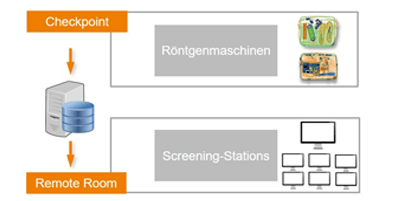
As part of the project “Threat Image Projection for Remote Cabin Baggage Screening” (RCBS) current strengths and weaknesses of different RCBS systems are evaluated based on scientific methods. Further questions are addressed either in a laboratory setting or in scientific field studies at airports and there will be improvement measures determined.
Co-Funding: Federal Office of Civil Aviation Switzerland
Scope: Switzerland
Start: 2016
ROBUST RISK BASED SCREENING AND ALERT SYSTEM FOR PASSENGERS AND LUGGAGE (TRESSPASS)

Description
The overall scope of
Co-Funding: EU Horizon 2020 Programme, Grant Agreement No. 787120
Scope: Europe
Start: 2018
OSARP Training Study
Description
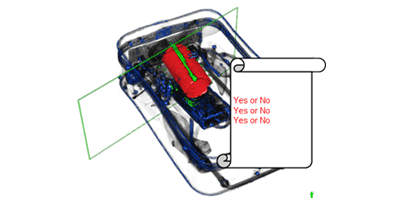
Computer-based training for X-ray image interpretation is mandatory for airport security screeners and is used at airports all over the world. Current training systems are focusing mainly on visual knowledge, i.e. what objects are forbidden and how do they look in an X-ray image. A useful addition
Funding: X-ray manufacturer, FHNW
Scope: Hold baggage screening at an international airport
Duration: 2017 – 2018